As societal and workplace norms continue to evolve, understanding the dynamics of moral growth has become more crucial than ever. This need has led many professionals to explore developmental theories to better grasp how individuals evolve morally. One of the most influential theories in this realm is Lawrence Kohlberg’s theory of moral development, which offers invaluable insights for both educators and corporate trainers.
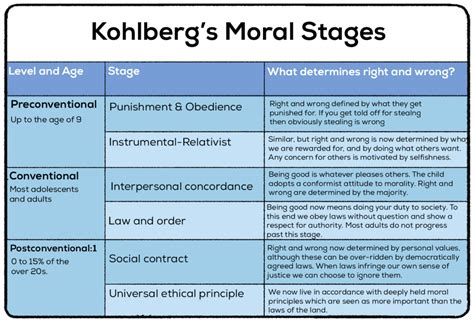
Kohlberg’s theory posits that moral reasoning progresses through distinct stages. These stages are divided into three main levels: Pre-Conventional, Conventional, and Post-Conventional. Each level consists of two stages, leading to a total of six stages. The theory sheds light on the progression of moral understanding from self-interest to a broader societal perspective, underscoring the importance of fostering moral growth in various settings, from schools to the workplace.
Key Insights
- Primary insight with practical relevance: Moral development stages guide educators and leaders to tailor their teaching or management styles according to individuals’ developmental levels.
- Technical consideration with clear application: Applying Kohlberg's framework in organizational settings can help develop more ethical workplace cultures.
- Actionable recommendation: Training programs should incorporate elements that advance employees’ moral reasoning to enhance ethical decision-making.
Pre-Conventional Level: Self-Interest and Compliance
At this stage, individuals’ moral reasoning is primarily driven by self-interest and a desire to avoid punishment. At stage one, the focus is on obedience and punishment. A child at this level does what is expected to avoid being punished. In stage two, individuals start to understand that other people have needs and desires, leading to a focus on reciprocity. For instance, a business might focus on fair trade to build loyalty among customers who see this as a win-win scenario.
Conventional Level: Conformity and Social Approval
At the conventional level, individuals’ moral reasoning is influenced by the need for conformity and the approval of others. Stage three involves the pursuit of interpersonal relationships and a desire for approval. Individuals seek to be seen as good and law-abiding citizens. In stage four, individuals adopt the law and order orientation, focusing on rules and maintaining social order. In an organizational context, this translates to employees who adhere to company policies and procedures as a means to earn the approval of superiors and to maintain a sense of justice and stability.
Post-Conventional Level: Principled Conscience
The post-conventional level marks the pinnacle of Kohlberg’s moral development theory, where individuals’ reasoning is guided by abstract principles rather than societal norms or rules. At stage five, individuals can balance individual rights with the welfare of the community. This stage involves a critical evaluation of laws and social norms, advocating for changes when deemed unjust. Stage six represents the ideal of universal ethical principles, where individuals act based on a sense of justice and a commitment to universal ethical principles, regardless of societal laws. This stage is less common but can be seen in leaders who prioritize ethical considerations over traditional business practices.
How can organizations apply Kohlberg’s theory to improve ethical behavior?
Organizations can apply Kohlberg’s theory by developing comprehensive training programs that guide employees through each developmental stage. This could include ethics training, leadership development, and scenario-based workshops that challenge employees to think beyond self-interest and conformity, promoting a more principled approach to moral reasoning.
What challenges might arise when implementing Kohlberg's stages in real-world settings?
A primary challenge is that individuals often do not remain static at a single stage; they can move back and forth between stages based on various influences. Additionally, the stages are abstract, making it difficult to measure an individual's exact stage of moral reasoning in a practical way. This can complicate efforts to tailor interventions effectively.
In conclusion, Kohlberg’s theory of moral development offers a robust framework for understanding the intricacies of moral reasoning. By delving into the different stages, educators and leaders can develop more effective strategies to foster ethical behavior and moral growth, ultimately enhancing both individual and organizational integrity.