P
Understanding moral development through the lens of Lawrence Kohlberg’s theory can illuminate the nuanced journey of ethical reasoning in individuals. Kohlberg’s theory is a classic framework in moral psychology that identifies stages in the way people think about moral dilemmas. Here, we demystify the complexity behind this theory and bring it into practical perspective, examining real-world applications.
Key Insights
- Kohlberg’s theory outlines three levels of moral development, each comprised of two stages.
- The theory emphasizes the cognitive aspect of moral reasoning, aligning with our understanding of how ethical decisions are made.
- Practical applications include tailoring ethical training programs based on individuals’ moral stages.
The Pre-Conventional Level
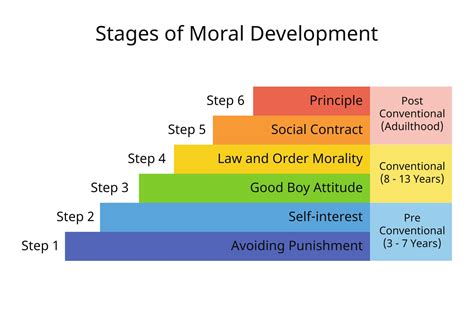
At the base of Kohlberg’s moral development model lies the pre-conventional level. This level is characterized by self-interest and the avoidance of punishment. Individuals at this level make decisions based on personal consequences, rather than abstract principles. For instance, a child might steal a cookie because they want to satisfy their hunger, not because stealing is wrong. This early stage shows that moral reasoning is heavily influenced by direct rewards and punishments.The Conventional Level
Moving up the ladder, the conventional level represents a shift toward conformist thinking. Individuals at this stage follow social norms and expectations to determine right and wrong. They may conform to group pressures and the desire for approval. For example, a teenager might recycle because their community values environmental protection, not solely out of self-interest or avoidance of punishment. At this stage, ethical behavior is often tied to maintaining the approval of others and upholding societal laws.The Post-Conventional Level
The highest level of Kohlberg’s theory is the post-conventional level. Individuals here base their moral reasoning on universal ethical principles, such as justice and human rights. They are guided by abstract values that transcend specific laws or societal norms. A real-world example could be a whistleblower who exposes corporate fraud despite possible personal consequences. This level signifies a deep understanding and commitment to universal ethical principles, going beyond conventional social rules.How does Kohlberg’s theory apply in workplace ethics?
Understanding these stages can aid in creating ethical training programs tailored to employees’ levels of moral reasoning, ensuring more effective communication of ethical standards.
Why is Kohlberg's theory important in education?
In educational settings, recognizing students’ moral stages helps teachers foster ethical development by engaging students at their appropriate level, thereby encouraging moral reasoning and critical thinking skills.
Kohlberg’s moral development theory offers profound insights into how ethical reasoning evolves. While it’s important to acknowledge critiques and subsequent developments in moral psychology, its core concepts remain a valuable tool for understanding and fostering ethical behavior across various domains. Through practical applications, we can better tailor ethical training, educational approaches, and societal norms to cultivate higher levels of moral reasoning.