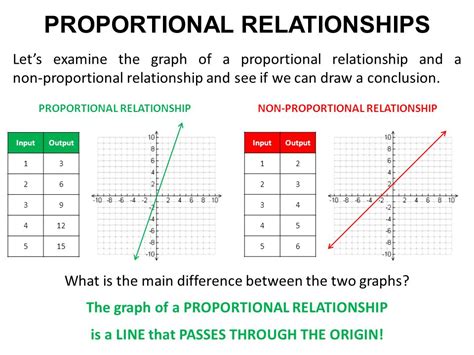
Understanding What Is a Proportional Relationship Explained Simply
Are you struggling to grasp the concept of proportional relationships? Don’t worry; you’re not alone. Many find this topic daunting at first, but once broken down, it becomes incredibly straightforward. This guide will walk you through a step-by-step approach to understand proportional relationships in a practical, real-world context. Let’s dive into how to make sense of this mathematical concept and apply it effectively in everyday life.
A proportional relationship describes a direct link between two quantities. In simpler terms, when one quantity increases, the other quantity increases at the same rate, and vice versa. This consistent rate is what we call a “constant of proportionality.” Whether you’re balancing recipes, adjusting prices in a business, or scaling maps, understanding proportional relationships is essential.
To help you quickly grasp the concept, let’s first look at the quick reference guide:
Quick Reference
- Immediate action item with clear benefit: Always start with finding the constant of proportionality to ensure you understand the relationship.
- Essential tip with step-by-step guidance: To identify a proportional relationship, ensure that the ratio of the two quantities remains constant.
- Common mistake to avoid with solution: Don’t confuse proportional relationships with linear relationships. In a proportional relationship, both quantities must depend on each other at all times.
Let’s break down the idea further with a detailed guide:
Step-by-Step Guidance to Understand Proportional Relationships
We’ll start with a simple definition and progress to real-world applications. Here’s what you need to know:
Definition and Basic Understanding
A proportional relationship occurs when two variables change at the same rate. This can be represented mathematically as y = kx, where k is the constant of proportionality. Essentially, the ratio y/x remains constant. For example, if y represents the number of pizzas and x represents the number of people, if each person gets one pizza, then y/x = 1, and the relationship is proportional.
Identifying Proportional Relationships
To identify a proportional relationship between two quantities, follow these steps:
- Determine the Ratio: Find the ratio between the two quantities. For instance, if 4 oranges cost $4, the ratio of price to oranges is $4/4 oranges = $1/orange.
- Consistency Check: Check if the ratio remains consistent for different quantities. For example, if 6 oranges cost $6, the ratio still equals $1/orange.
- Calculate the Constant: If the ratio is constant, you’ve found your constant of proportionality. In our example, the constant is $1/orange.
Real-World Applications
Understanding proportional relationships can significantly help in various practical scenarios:
- Cooking: If a recipe calls for 2 cups of flour to make 24 cookies, doubling the ingredients (4 cups of flour for 48 cookies) maintains the proportional relationship.
- Shopping: If 5 apples cost $5, then 10 apples should cost $10. This is a proportional relationship.
- Traveling: If a car travels 120 miles in 2 hours, it travels 60 miles per hour. This consistency indicates a proportional relationship.
Now let’s delve deeper into how to effectively use this understanding:
How to Apply Proportional Relationships Practically
Detailed Guide to Practical Application
Understanding proportional relationships allows you to make informed decisions in everyday activities. Here’s how you can implement it practically:
Scaling Recipes
Imagine you’re doubling a recipe. You need to ensure that all ingredients scale up proportionally. If a recipe calls for 3 cups of sugar to make 12 cookies, doubling it would require 6 cups of sugar for 24 cookies, maintaining the same sugar-to-cookie ratio.
Adjusting Business Pricing
In business, pricing items in a proportional manner can help keep costs and profits balanced. If a company charges 50 for 10 hours of service, the proportional rate is 5 per hour. Charging $75 for 15 hours keeps this rate consistent.
Creating Proportional Maps
Maps often use a scale to show distances proportionally. If 1 inch on the map represents 5 miles, then 3 inches represents 15 miles, maintaining the proportional relationship between map distance and real-world distance.
Using Proportional Ratios in Art
Artists often use proportional relationships to create scale models or adjust sizes in their work. If a drawing needs to be 1/10th the size of the actual object, maintaining this proportion helps ensure accuracy and balance.
Now, let’s address some common questions readers might have:
How do I determine if a relationship is proportional?
To determine if a relationship is proportional, you must verify that the ratio of one quantity to another remains constant across different measurements. For instance, if the ratio of time to distance in travel is consistent, it indicates a proportional relationship.
Can proportional relationships be nonlinear?
Proportional relationships inherently involve linear relationships where the constant of proportionality is the slope. However, they don’t imply curves or nonlinear patterns. Always look for constant ratios rather than variable slopes.
What happens if the constant of proportionality changes?
If the constant of proportionality changes, the relationship is no longer proportional. For example, if the price of apples doubles overnight, the new price no longer maintains the original proportional relationship with quantity.
By understanding and applying proportional relationships, you can solve various practical problems more effectively and make well-informed decisions in different scenarios. Take the time to practice these concepts through real-world examples, and you’ll find the concept becoming second nature.
To summarize, a proportional relationship involves maintaining a consistent rate between two quantities. This guide has provided you with step-by-step guidance and practical applications to ensure you grasp this concept fully and use it effectively in your daily life.